Why Is There No Number 13 on the London Eye?
The wheel carries 32 capsules numbered 1 to 33, with no 13 anywhere on it. The reason is older than the London Eye and sits in plenty of tall buildings.
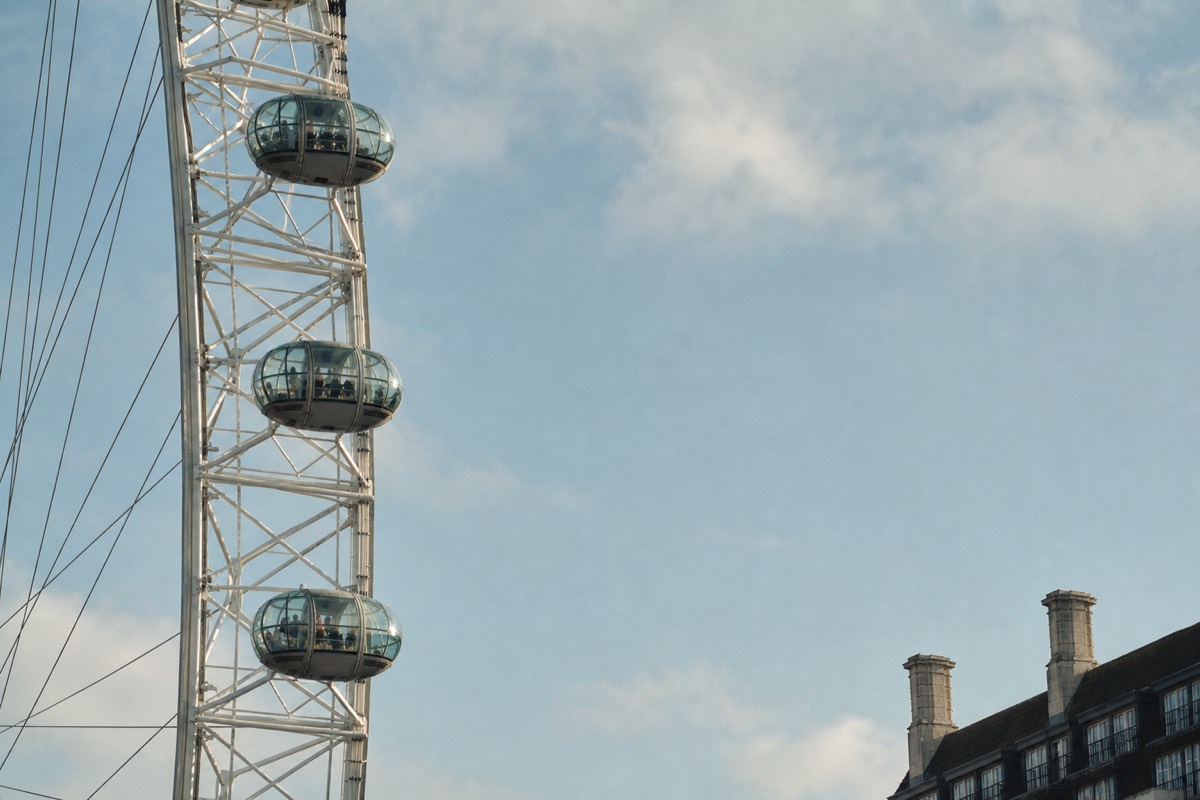
Count the capsules on the London Eye and you get 32. Read the numbers painted on them and the highest one says 33. There is no capsule 13, and there never has been. The wheel skips straight from 12 to 14, which means the numbering runs 1 to 33 across 32 pods, and everybody riding what they think is capsule 14 is in fact riding the thirteenth capsule on the rim.
The reason is not structural, not a spare pod held back, and not a maintenance quirk. It is superstition, applied to a piece of British engineering to avoid the unlucky-number association.
The oldest reason in the building trade
Fear of the number 13 has a name, triskaidekaphobia, and a very long commercial history. Hotels number their floors 12, 12A, 14. Tower blocks skip the thirteenth entirely. Airlines quietly leave row 13 out of the seat map. Hospitals have been known to renumber wards. None of it is engineering. All of it is the same calculation: it costs nothing to skip a number, and it removes a reason for a small fraction of customers to feel uneasy about the room, the seat or, in this case, the capsule they have been assigned.
An observation wheel is a slightly funnier case than a hotel, because you do not choose your capsule. You get whichever one arrives at the boarding platform when you reach the front of the queue. Nobody could ask to be moved out of number 13, which makes skipping it a purely pre-emptive gesture. The number simply never exists, so nobody ever has to think about it.
Which is, when you consider it, the most thorough way to solve the problem. A hotel that skips floor 13 still has a thirteenth floor and simply calls it something else, and everyone knows it. An observation wheel that skips capsule 13 has the same thirteenth position on the rim, but since nobody is choosing and nobody is checking, the fiction holds perfectly.
It is also one of the few London Eye facts you can verify without a ticket. The numbers are painted on the capsules, large and legible. Stand in the queue on the South Bank, or halfway across Westminster Bridge with a decent view of the rim, and watch them come round. With 32 capsules and a 30-minute rotation, roughly one passes any fixed point every minute, so you may need to wait a while for the right pair. When it arrives, it goes twelve, then fourteen. It is the sort of thing nobody believes until they have seen it themselves.
So which capsule is really the thirteenth?
Number 14. If you board it, you are sitting in the pod that occupies the thirteenth position on the rim, protected from bad luck by nothing more than a coat of paint saying otherwise. This is either reassuring or the exact opposite, depending on how literally you take these things.
It also makes for the best possible thing to say out loud about ninety seconds after the door closes, when everyone in the capsule is still working out where to stand.
There is a second numbering question that comes up almost as often: why 32 capsules? The London Eye operator describes them as representing London’s 32 boroughs. The capsule numbers still run from 1 to 33 because 13 is omitted.
The other numbering story nobody tells you
The missing 13 is not the only bit of arithmetic on this wheel that does not quite add up on first inspection. The London Eye was ceremonially opened on 31 December 1999, timed to the millennium, which is where the name Millennium Wheel comes from and why this site is called what it is. It did not actually carry paying passengers that night. Technical delays followed the ceremony, and the public opening took place on 9 March 2000.
So the millennium wheel opened for the millennium, and also opened three months after the millennium, and both statements are true. It was originally granted planning permission for five years and was meant to come down. In 2024, Lambeth Council confirmed that it stays on the South Bank permanently, which makes it the most successful temporary structure in London since a certain tower in Paris pulled the same trick.
The full numbering and construction detail is set out on the London Eye's Wikipedia entry, which is where the 1 to 33 capsule numbering is documented.
Worth knowing before you go up
None of this changes the ride. You get thirty minutes, a sealed capsule, a slow turn, and a panoramic view across central London. But it is a genuinely good piece of trivia, it is true, and unlike most London Eye facts floating around online, you can verify it with your own eyes from the queue on the South Bank: count the pods going past, watch the numbers, and see where 13 should have been.
Choose Your London Eye Experience
Ready to see London from inside the wheel? Check your date and entry option before fixing the rest of your South Bank plans.
London Eye Standard or Fast Track Ticket. A 30-minute rotation. Choose standard or fast-track boarding; security and some waiting remain. Reserve the dated option that suits your party.
Tailor Your Ticket Choice
- London Eye Champagne Experience: A shared-capsule 30-minute ride with fast-track entrance, an English host, Eye Lounge access and a glass of champagne for adults aged 18+. Security screening still applies.
Choose dates directly on GetYourGuide
Confirm your visit date on the booking page before payment.