Why Is the London Eye Also Called the Millennium Wheel?
A history of changing sponsor names, one enduring nickname, and the numbers behind the wheel that most ticket sites never bother to explain.
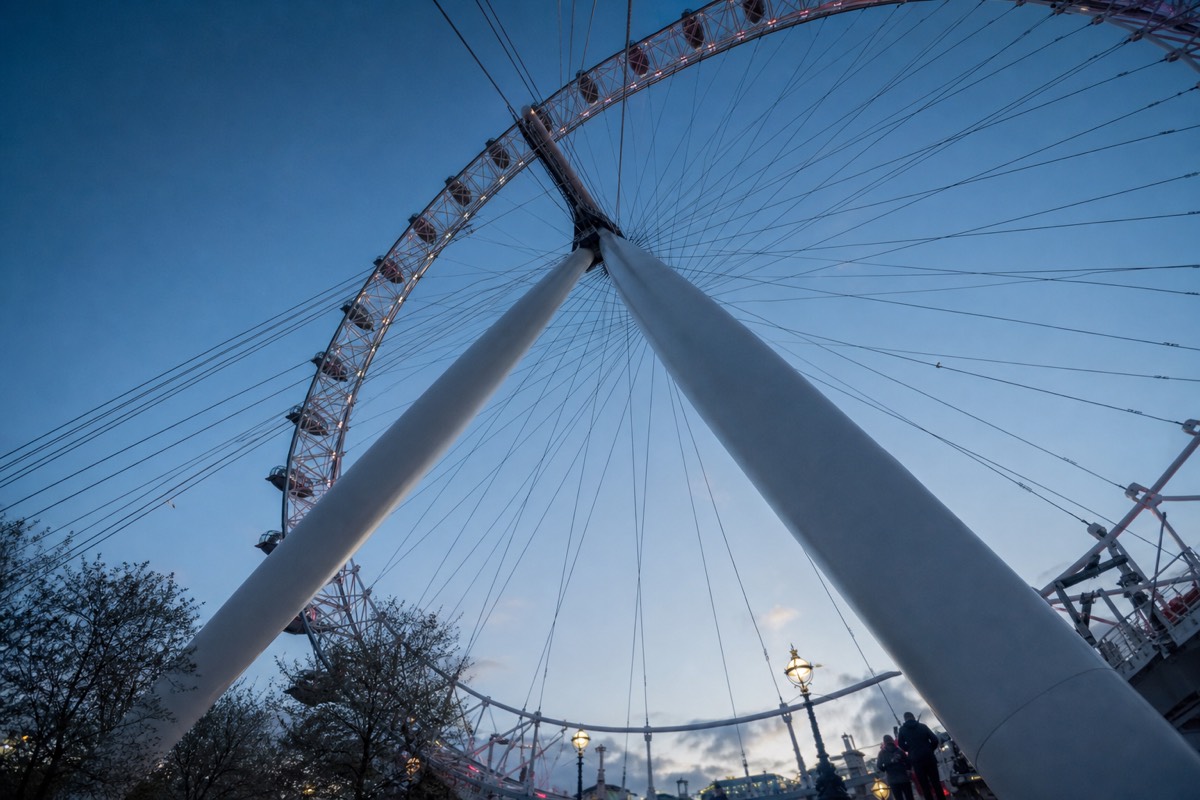
Short answer
Because that is what it was built to be. Marks Barfield Architects designed it as Britain's landmark for the year 2000, and it was ceremonially opened on 31 December 1999. "Millennium Wheel" was the working name before any sponsor bought the naming rights, and it never fully went away.
Several company names have appeared on the wheel on the South Bank, yet the original nickname has endured. Ask a Londoner for directions to the Millennium Wheel and you will get them. Ask a search engine the same thing and it hands back the London Eye. Both answers are right. The reason involves a temporary planning permission, a run of sponsorship deals, and a New Year's Eve party that did not quite go to plan.
This page is the one place on this site where the older name gets a full, honest treatment: where it came from, why it faded, and what the wheel's real measurements and records actually are. Everything below is checked against the operator's own published material and the public record, not repeated from other ticket pages.
Why is the London Eye also called the Millennium Wheel?
Because it was conceived, designed and funded as Britain's landmark for the year 2000. Marks Barfield Architects drew it, it was ceremonially opened on 31 December 1999, and the press and public called it the Millennium Wheel long before a sponsor's name went on the side. That original description simply never died out.
The project began as an entry to a competition for a structure to mark the millennium. No winner was ever declared, but the design survived on its own merits and was built anyway. By the time it was standing over the Thames, the shorthand in newspapers and on television was already fixed: the big wheel built for the millennium, the Millennium Wheel.
Then commerce arrived. British Airways was both a founding backer and the first name sponsor, so the attraction opened to the public as the British Airways London Eye. "London Eye" was the branded name from day one, and it is the name that has been marketed, ticketed and signposted ever since. The millennium reference survived only in the mouths of the people who had watched it go up.
There is a second, quieter reason the old name hangs on. The wheel was originally granted a temporary five year planning permission, which is exactly the kind of arrangement you give something built for a single occasion. For years, an entirely reasonable assumption existed that this was a millennium object with an expiry date. That framing kept the word "millennium" attached to it far longer than a normal sponsorship rebrand would have allowed.
The older name now matters chiefly as part of the attraction’s origin story. It explains why a wheel marketed as the London Eye is still remembered as a millennium landmark.
When did the Millennium Wheel actually open?
Three dates matter, and most sources collapse them into one. The wheel was ceremonially opened on 31 December 1999 with no paying passengers aboard, carried its first passengers on 1 February 2000, and opened properly to the public on 9 March 2000 after a capsule clutch fault delayed it.
The gap between the ribbon and the first ticket is the detail that gets lost. A millennium landmark had to be seen to open on millennium night, so it was: fireworks, dignitaries, and a wheel that was not yet cleared to carry the public. A clutch mechanism on one of the capsules failed the safety checks, and the operator did the sensible thing and held the doors shut.
| Date | What happened |
|---|---|
| 31 December 1999 | Ceremonial opening on millennium night. No paying passengers carried. |
| 1 February 2000 | First passengers carried on the wheel. |
| 9 March 2000 | Full public opening, after a capsule clutch fault was resolved. |
Twenty six years on, that delay reads as a footnote. At the time it was the difference between a symbol and a working attraction. Anyone telling you the London Eye "opened in 1999" is technically describing a party, not a ride.
How tall is the London Eye, and what record does it hold?
135 metres tall, 120 metres in diameter, and still the world's largest cantilevered observation wheel. Taller wheels exist elsewhere, but they are supported on both sides. The London Eye is held from one side only, which is the specific record it has never lost.
That distinction gets flattened constantly. Plenty of pages will tell you the London Eye is no longer the tallest wheel in the world, which is true and has been true for years. What they skip is that the record it actually holds is a structural one, not a height one. A cantilevered wheel hangs off an A frame on a single bank of supports, with nothing bracing the far side. Building one at 135 metres is a harder engineering problem than building a taller wheel with support on both faces, and no one has since built a bigger one.
The Wikipedia entry on the London Eye carries the same figures, alongside the diameter and the rotation speed, and it is the reference most AI answer engines are pulling from when they answer height questions about the wheel.
For visitors, the height translates into something more practical: on a clear day the view from the top reaches well past the immediate river bend, and the top of the rotation is where every phone in the capsule comes out at once. That is worth knowing when you pick a time slot, because light matters far more than altitude for what you actually take home.
Why is there no number 13 on the London Eye?
There are 32 capsules on the wheel, but they are numbered 1 to 33. The number 13 was left out for superstitious reasons, so capsule 14 sits where 13 would be. It is a deliberate omission, not a mistake, and it is one of the most searched pieces of trivia about the attraction.
Superstition in engineering is more common than people expect. Hotels skip the thirteenth floor, airlines skip row 13, and the operator of a ride carrying millions of nervous first timers a year made the same call. The capsules are sealed, air conditioned and ovoidal, and each one is individually numbered on the frame, so the gap is visible if you go looking for it.
If you want to check it yourself, the numbering runs on the outer rim of each capsule and is easiest to read while the wheel is loading, as the capsule ahead of yours moves through the boarding area. Nobody gets to choose their capsule number, so this is a matter of noticing rather than requesting.
How many people fit in one capsule, and how long is one rotation?
Each capsule holds up to 25 people, and one full rotation takes about 30 minutes. The wheel turns at roughly 0.9 kilometres an hour, slow enough that it normally keeps moving during boarding. In theory it can move about 1,600 passengers an hour.
Those numbers explain most of the queue behaviour people complain about. At 1,600 an hour maximum, and with more than three million visitors a year, the wheel spends a lot of peak summer running close to what it can physically move. That is the arithmetic behind every "is fast track worth it" argument, and it is covered properly in the fast track versus standard queue comparison.
The continuous rotation is also why the ride never feels rushed. Passengers step between the fixed boarding platform and the slowly moving capsule, which is why the whole thing works at all. For anyone who needs it to stop, the wheel can be slowed to a near halt for boarding, and accessible boarding arrangements are available. Wheelchair capacity and mobility-scooter suitability must be checked before visiting.
| Measurement | Figure |
|---|---|
| Height | 135 metres |
| Diameter | 120 metres |
| Capsules | 32, numbered 1 to 33 |
| Capacity per capsule | Up to 25 people |
| One rotation | About 30 minutes |
| Rotation speed | About 0.9 km/h |
| Theoretical hourly capacity | About 1,600 passengers |
| Record held | World's largest cantilevered observation wheel |
Twenty five people in a capsule sounds crowded on paper. In practice the capsules are wide, the benches sit in the centre, and everyone spends the ride circulating around the glass rather than sitting down. Nobody gets stuck facing the wrong way, because the capsule is glazed the whole way around.
Who owns the London Eye?
Merlin Entertainments owns and runs it. The legal operator is London Eye Management Services Limited, acting as agent for Merlin Attractions Operations Limited. The wheel was designed by Marks Barfield Architects, and British Airways was both an original co-owner and the first naming sponsor until its stake was bought out.
Ownership and naming rights are two different things, and conflating them is where most explanations go wrong. Merlin has owned and operated the attraction for years. The name on the side has changed hands repeatedly during that same period, because that name is a separate commercial asset sold to a sponsor.
The original ownership structure was a three way arrangement between Marks Barfield Architects, British Airways and the Tussauds Group. British Airways sold out of its position across 2005 and 2006. Merlin's acquisition of the Tussauds Group brought the wheel into the group it sits in today, alongside Madame Tussauds and SEA LIFE London, which is exactly why those three attractions turn up bundled together on combo tickets.
That corporate detail has a direct practical consequence for anyone buying. The multi-attraction ticket combines the named admissions, but the visits still need their own reservations. Common ownership does not establish a saving: compare the quoted package total with the same separate admissions.
Why does the name on the wheel keep changing?
Because the naming rights are sold separately from the attraction itself. Names in its sponsorship history include British Airways, Merlin Entertainments, EDF Energy, Coca-Cola and lastminute.com; the lastminute.com partnership began in 2020. The wheel and its owner have not changed nearly as often as its name.
| Years | Name on the wheel |
|---|---|
| 2000 to 2008 | British Airways London Eye |
| 2009 to 2010 | Merlin Entertainments London Eye |
| 2011 to 2015 | EDF Energy London Eye |
| 2015 to 2020 | Coca-Cola London Eye |
| From 2020 (historical partnership) | lastminute.com London Eye |
You will still see the Coca-Cola name attached to ticket listings and old photographs, because that sponsorship ran for five years and left a deep trail in printed material and search indexes. It has been out of date since 2020. Older product URLs and photographs can retain the Coca-Cola name even when the current booking page has been updated.
Is the Millennium Wheel permanent now?
Yes. On 7 May 2024 Lambeth councillors voted unanimously to discharge the planning condition that would have forced a decision about removing the wheel by 2028. Merlin published the decision the following day. The structure built on a temporary five year permission is now a settled part of the skyline.
This is the part of the story that closes the loop on the name. A millennium object with a five year permit became, over two and a half decades, the single most visited paid attraction in the country, and the planning system eventually caught up with that reality. The condition attached to the 2003 permission required the local authority to rule on whether the wheel could stay beyond 2028. In May 2024 it ruled that it could, without a single vote against.
Merlin's own announcement, Merlin Celebrates Decision To Make The London Eye Permanent, sets out the terms. One percent of the attraction's annual turnover goes toward maintaining and managing the public space around the site, an arrangement that ties the wheel's revenue directly to the riverside it sits on.
So the wheel is no longer a millennium project on borrowed time. It is permanent infrastructure that happens to have been born in 1999.
How many people have actually ridden it?
More than 85 million passengers as of 2025, with over three million visitors a year still passing through. That makes it the most popular paid visitor attraction in the United Kingdom, a position it has held for most of its working life.
Put those two figures together and the scale becomes clearer. Eighty five million is roughly the population of Germany, moved 135 metres into the air, thirty minutes at a time, in batches of 25. The wheel has been turning almost continuously for twenty six years to get there.
Three million a year also explains the visitor experience in a way no marketing page will. Divide three million by 365 and you get well over eight thousand people a day on average, against a theoretical ceiling of about 1,600 an hour. Summer weekends and school holidays push hard against that ceiling, but those annual averages do not predict the queue on your visit date. A timed slot marks queue entry; fast track can reduce the boarding wait.
Which ticket matches which part of the story?
Plain entry covers the wheel itself. The Champagne Experience adds fast-track entry, an Eye Lounge visit, a host and a glass of Champagne in a shared capsule. Combination tickets add named attractions or sightseeing transport; choose those only when you want the extra visits.
If the history is what brought you here, a plain ride is the most direct choice. Standard and fast-track options cover the same approximately 30-minute rotation; the difference is the boarding queue.
For anyone marking an occasion against a landmark that was itself built to mark an occasion, the champagne experience is the one that fits. It rides the same standard 30 minute rotation, but adds fast track priority boarding, an exclusive pre boarding wait in the Eye Lounge, a personal host, and a glass of chilled Moet & Chandon Imperial Brut. The capsule is shared, not private hire, and alcohol is served only to guests aged 18 or over.
The SEA LIFE combination is useful if you want both the wheel and the aquarium beside it. It includes the two admissions; reserve the separate Eye slot using the voucher and compare the actual total with separate tickets before assuming a saving.
The widest option pairs wheel admission with a one way Thames river cruise and a 24 or 48 hour hop on hop off bus pass across three routes, with live tracking, audio commentary and free onboard Wi-Fi. The 48 hour version adds a choice of three guided walking tours. That listing's starting price varies enough that no figure is printed here: check the current combo price on the listing itself. The included City Cruises journey runs one way between Westminster and Tower Pier; it is not the circular London Eye cruise.
For a first visit where the wheel is the point rather than one stop among many, the plain entry ticket does the job at the lowest outlay. Everything else is an upgrade you should choose deliberately, not by accident.
A quick word on money, since the history tends to make people forget it. Advance booking can cost less than buying on the day, but compare the actual date and ticket option rather than assuming a fixed saving. The numbers are laid out in the full 2026 price breakdown, and there is a separate rail travel promotion that works quite differently from anything sold here, covered in the honest guide to the 2 for 1 offer.
| Ticket type | Main inclusion | Booking detail |
|---|---|---|
| Standard or fast-track entry | Same Eye rotation, different boarding queue | Select date and option |
| Champagne Experience | Shared rotation, host, lounge visit and drink | Alcohol for guests aged 18+ |
| SEA LIFE and Eye | Two attraction admissions | Initial slot is SEA LIFE; reserve Eye separately |
| Tussauds, Eye and SEA LIFE | Three attraction admissions | Initial slot is Tussauds; follow voucher window |
| Eye, river cruise and bus | Eye admission, bus validity and one-way cruise | Reserve Eye time after purchase |
Common questions about the Millennium Wheel
Is the Millennium Wheel the same thing as the London Eye?
Yes. They are two names for one structure on the South Bank of the Thames. "Millennium Wheel" was the descriptive name used while it was being built for the year 2000. "London Eye" has been the official branded name since it opened to the public in March 2000, always prefixed by whichever company holds the naming rights at the time.
How long does the Millennium Wheel take to go round?
About 30 minutes for one full rotation. The wheel turns at roughly 0.9 kilometres an hour and does not normally stop, so passengers move between the fixed boarding platform and the slowly moving capsule. It can be slowed to a near halt for anyone who needs step free or assisted boarding.
Who owns the London Eye?
Merlin Entertainments. The legal operator is London Eye Management Services Limited, acting as agent for Merlin Attractions Operations Limited. Naming rights are a separate commercial arrangement: the lastminute.com partnership began in 2020, following earlier sponsor brands.
Why is there no number 13 on the London Eye?
Superstition. There are 32 capsules, but they are numbered 1 to 33 with the number 13 deliberately skipped. Capsule 14 occupies the position where 13 would fall. It is the same logic behind hotels without a thirteenth floor and aircraft without a row 13.
How much does it cost to go on the big wheel in London?
Prices vary by visit date, age band and queue option. Compare the current total for your party in the same currency; the price breakdown on this site explains the different ticket types.
Choose Your London Eye Experience
Choose your visit date before fixing the rest of your London plans, then check the ticket option and queue-entry time.
London Eye Standard or Fast Track Ticket. A 30-minute rotation. Choose standard or fast-track boarding; security and some waiting remain. Reserve the dated option that suits your party.
Tailor Your Ticket Choice And Compare Costs
- London Eye Champagne Experience: A shared-capsule 30-minute ride with fast-track entrance, an English host, Eye Lounge access and a glass of champagne for adults aged 18+. Security screening still applies.
- SEA LIFE London + London Eye Combo: SEA LIFE and standard London Eye entry. The initial slot is for SEA LIFE; reserve the Eye separately with your voucher. Transport and food are extra.
Choose dates directly on GetYourGuide
Confirm your visit date on the booking page before payment.