London Eye vs the Shard vs Sky Garden: Which View Is Worth Paying For?
One of the three is free, one is 109 metres higher, and one moves. That decides more than the ticket price does.
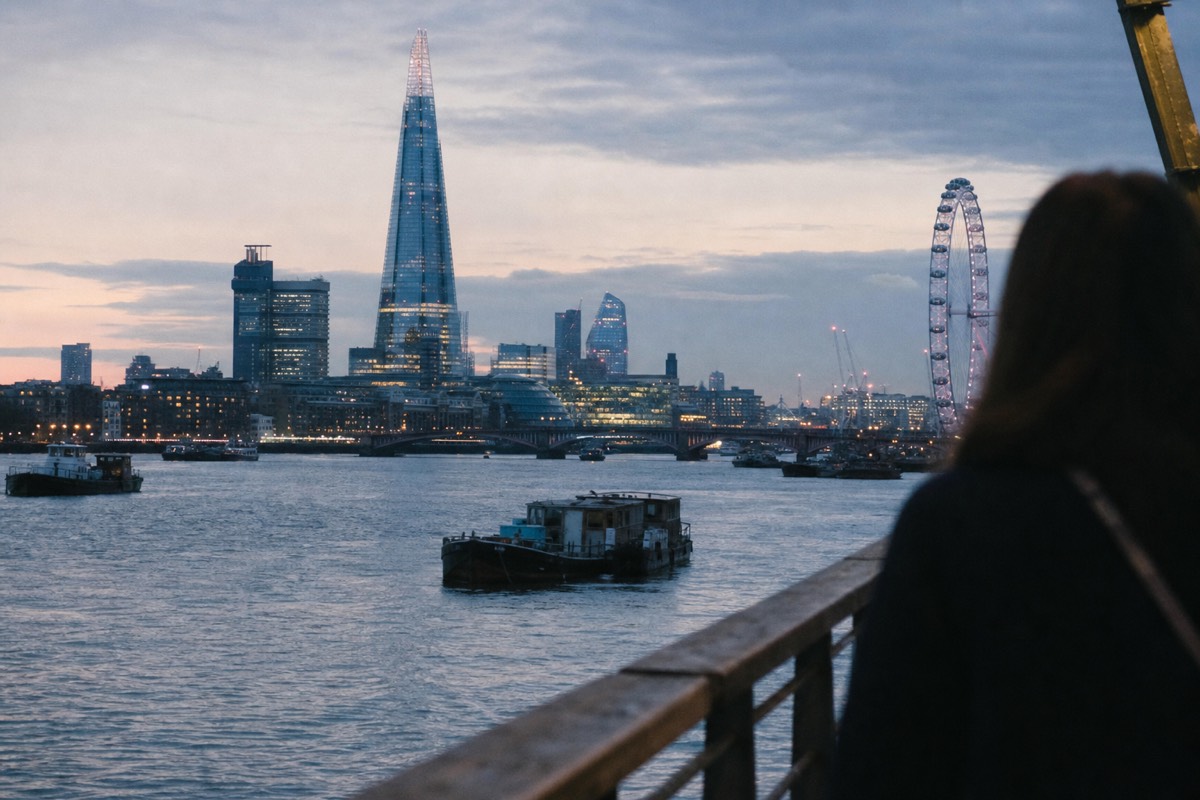
Short answer
The Shard's deck is highest at 244 metres, Sky Garden is free at 155 metres, and the London Eye is lowest at 135 metres but sits directly opposite Parliament and moves. Pick the Shard for altitude, Sky Garden for a free look, and the wheel for the classic Thames and Westminster view.
Height is the first thing people compare and the least useful. The Shard's public deck sits at 244 metres, Sky Garden at 155, and the London Eye tops out at 135. On that measure the wheel comes last of the three, yet its lower viewpoint can still be the better fit. The reason is position. The Shard and Sky Garden both look at Westminster from a distance; the London Eye is parked directly across the water from it. What you are choosing between is not really altitude, it is which London you want in front of you.
Which is better, the London Eye or the Shard?
The Shard if you want maximum height and an open-air deck. The London Eye if you want Parliament, Big Ben and the Thames close enough to photograph properly. The Shard is 109 metres higher at its viewing level, but it is in Southwark looking west; the wheel is on the South Bank looking straight across at the postcard.
Here is the whole comparison in one place, including the free option that keeps appearing in the same searches.
| London Eye | The View from The Shard | Sky Garden | |
|---|---|---|---|
| Viewing height | 135 m | 244.3 m | 155 m |
| Structure height | 135 m | 309.6 m | 160 m building |
| Type | Moving observation wheel | Static viewing floors, plus an open-air deck | Static indoor garden with terrace |
| Open air? | No, sealed capsules | Yes, on level 72 | Terrace, closing earlier than the garden |
| Price | Compare the selected-date total | Compare the selected-date total | Free public timed ticket |
| Time you get | About 30 minutes, one rotation | Stay until closing | One-hour slot on a free ticket |
| Location | South Bank, opposite Parliament | London Bridge, Southwark | 20 Fenchurch Street, the City |
| Nearest station | Waterloo, about 5 minutes | London Bridge, about 2 minutes | Walk-up from the City streets, EC3M 8AF |
| Booking | Timed slot, book ahead | Timed slot, book ahead | Free tickets released about three weeks ahead |
| Opened | 9 March 2000 | 1 February 2013 | January 2015 |
Notice how little of that table is about height. The differences that change your day are the time you get, the direction you face and whether the ticket costs anything.
How much higher is the Shard than the London Eye?
The Shard's public viewing level on floor 72 is 244.3 metres, against 135 metres at the top of the London Eye's rotation. That is a difference of about 109 metres, or roughly 80 percent more altitude. The building itself reaches 309.6 metres, but the upper section above the deck is not open to visitors.
The Shard is the tallest building in the United Kingdom and 95 storeys with 72 habitable floors, designed by Renzo Piano and clad in around 11,000 glass panes. The public viewing experience, which opened on 1 February 2013, occupies levels 68 and 69 indoors, with a champagne bar, and an open-air sky deck on level 72.
Whether that extra height improves the view is genuinely arguable. Above roughly 200 metres, central London flattens: the streets read as texture rather than as places, and individual landmarks shrink. The Shard's answer is scale, an enormous panorama that on a clear day runs to the hills beyond the city. The wheel's answer is intimacy, a view where you can pick out the pattern of traffic on Westminster Bridge.
Which is better, Sky Garden or the London Eye?
Sky Garden is free, 20 metres higher and open in the evening. The London Eye is paid, lower and better positioned. If cost is the deciding factor, Sky Garden wins outright. If the view you want is Parliament and the river bend, the wheel does something Sky Garden cannot.
Sky Garden occupies the top three floors of 20 Fenchurch Street, the building Londoners call the Walkie-Talkie. It opened in January 2015 and sits 155 metres up on floors 35 to 37, planted with more than 2,000 Mediterranean and South African species under a glass dome, with an outdoor terrace and 360-degree views.
The catch is the booking system rather than the price. Sky Garden’s free tickets are available up to around three weeks ahead and allow an hour from entry. Public access is currently listed as 10am–6pm on weekdays and 11am–9pm at weekends, subject to closures. Walk-ins depend on space and are not accepted after 5pm on weekdays. Bar and restaurant bookings have separate arrangements.
What Sky Garden actually gives you that neither paid option does is time to sit down. It is a place you can spend an hour with a coffee, indoors, with a view. The London Eye gives you 30 minutes in a moving pod, and the Shard gives you an unlimited stay on a viewing floor. All three are different shapes of the same hour.
The direction problem is the honest limitation. From the City, the Palace of Westminster is a small cluster on the western horizon, and the foreground is office towers. That is a real view of London, just not the one on the postcards.
What is each one actually like?
The London Eye is a slow, continuous climb in a sealed glass capsule with a changing angle. The Shard is a fixed floor you wander at your own pace, with an open-air level. Sky Garden is a plant-filled public room that happens to be 155 metres up.
The difference between moving and static changes the experience more than the height gap does. On a wheel, the composition never settles: Westminster is beneath you, then level with you, then behind you, and every minute produces a different photograph. On a viewing floor you find your window and stay there, which suits people who want to study a city rather than watch it turn.
The Shard's level 72 is the strongest argument for paying more. An open-air deck at 244 metres is a genuinely different sensation from looking through glass, with wind and city noise reaching you. There is no equivalent on the London Eye, where every capsule is sealed and air-conditioned by design.
Against that, the wheel's 32 capsules hold small enough groups that the experience feels semi-private, with accessible boarding arrangements subject to the operator’s requirements. At the Shard you queue for security and take two lifts. At Sky Garden you go through an airport-style bag check in an office lobby before the lift.
How long does each visit take?
The London Eye is fixed at about 30 minutes for one rotation, plus queueing. The Shard has no time limit, so a visit runs from 45 minutes to a couple of hours. Sky Garden's free ticket gives you a one-hour slot.
| Time on the viewpoint | Total to budget | What controls the length | |
|---|---|---|---|
| London Eye | About 30 minutes | 60 to 90 minutes | Queue length and whether you hold a fast-track slot |
| The View from The Shard | Unlimited until closing | 60 to 120 minutes | Your own patience, plus lift and security queues |
| Sky Garden | One hour | 75 to 90 minutes | The one-hour slot and the lobby bag check |
Fixed duration is not automatically a drawback. Half an hour is close to the point at which most people have looked at everything they wanted to look at, and the wheel does the timekeeping for you. The Shard's open-ended stay works best if you plan to eat or drink there, since level 68 and 69 include a champagne bar and there is little reason to stand on a viewing floor for two hours otherwise.
One scheduling note. The Shard's opening hours vary by date, with last entry an hour before closing and the bars stopping service around half an hour before that. The wheel runs to published daily hours with the last rotation set accordingly, covered properly in the guide to London Eye opening times and the best slots to book.
What does each one cost?
Both paid attractions should be compared using the actual date and party total. London Eye prices vary with capacity and demand; the Shard also offers date-specific tickets. Sky Garden’s public timed entry is free.
Date-specific pricing matters at both paid attractions. Dynamic pricing means a Shard ticket on a wet Tuesday morning and one at sunset on a Saturday in July are not the same purchase, and neither is a fair number to quote as "the price". The official View from The Shard visitor page is the place to see what your date actually costs.
The London Eye listing lets you compare standard and Fast Track options. Use the selected-date price and booking terms rather than a cached starting price. A full breakdown of who pays what sits in the price guide for the standard ticket.
For a couple, compare the final two-person totals in the same currency. A free Sky Garden reservation and a paid Eye or Shard ticket are different experiences; do not assume a fixed price ranking between the two paid attractions.
Which one is best for photographs?
The London Eye for landmark shots, the Shard for panoramas, Sky Garden for the shot with foreground interest. The wheel's advantage is that Parliament fills the frame; the Shard's is that everything fits in it.
Glass and reflections affect many viewpoints. On the Eye, keep the lens close to the capsule window and turn the flash off. The Shard has an open-air level, but an outdoor deck does not guarantee an unobstructed, reflection-free shooting position. At Sky Garden, the angle of the glass changes the reflections from one spot to another.
Time of day matters more than equipment. The wheel faces roughly north across the river, so compare an offered slot with the light and sunset time for your date. The Shard, being south of the river and much higher, is better for the wide golden-hour sweep than for any single landmark.
Anyone weighing an evening slot against a daytime one will find the trade-off argued out in whether the London Eye is better by day or after dark.
Which is better in bad weather?
The Shard publishes a conditional View Guarantee for a return visit after poor visibility. This is different from cancellation or rescheduling on an Eye ticket, which depend on the selected booking’s terms and deadline.
Low cloud affects the Shard's deck more than the wheel, simply because it is higher. At 244 metres you can be inside the cloud base on a day when the London Eye at 135 metres is still under it with a usable, if grey, view. That is the counterintuitive part of the height comparison: more altitude increases the chance of seeing nothing at all.
Sky Garden is the most weather-proof of the three, because the garden is under glass and the view is a bonus rather than the entire product. Even on a poor day there is a warm room, plants and a coffee at the end of the lift ride.
Rain does not close the wheel, and the capsules stay comfortable. Wind is the operational factor, and very high winds can stop the wheel temporarily, so allow for operational disruption when arranging the rest of your day.
Which should you pick if you only have time for one?
First-time visitor: the London Eye, because the view it gives you is the view of London people picture. Repeat visitor or budget trip: Sky Garden. Someone who wants the biggest possible panorama and open air: the Shard.
| If this is you | Pick | Why |
|---|---|---|
| First visit to London | London Eye | Parliament, Big Ben and the river bend at close range |
| Travelling on a budget | Sky Garden | Free, higher than the wheel, reserve an offered free slot |
| Chasing maximum height | The View from The Shard | 244 m viewing level and an open-air deck |
| Photographing landmarks | London Eye | Closest to the classic Westminster frame |
| Photographing the whole city | The View from The Shard | High panoramic perspective; check deck access for your visit |
| With small children | London Eye | 30 minutes, sealed capsules, no edges |
| Marking an occasion | London Eye upgrade | Lounge, host and champagne on the wheel itself |
| Wet, low-cloud day | Sky Garden | Indoors, planted, and the view is a bonus |
A fourth option belongs in this conversation, even though it is not a viewpoint at all. A Thames river cruise puts you at water level looking up at everything the three decks look down on, and it doubles as transport between them. The bundle that pairs a one-way cruise and a multi-day bus pass with wheel admission is broken down in the river cruise combo guide.
Can you do more than one in a day?
Comfortably, yes. All three sit within a couple of miles of each other along the Thames, and the walk between the London Eye and the Shard follows the South Bank the whole way. The constraint is booking windows, not distance.
A workable order runs west to east. Start with an offered morning slot on the London Eye if it fits your itinerary, walk the South Bank past the Tate Modern and Borough Market, and take an afternoon or early-evening slot at the Shard, whose deck is two minutes from London Bridge station. Sky Garden then needs its own separate free slot, which you should reserve before relying on it in the itinerary.
Doing all three in a day is more repetition than most people want. Two is the sensible maximum, and the strongest pairing is one high static viewpoint with one moving or water-level experience rather than two decks that show you the same city from similar angles.
Cost-wise, the London Eye plus Sky Garden is the efficient combination: one paid ticket, one free ticket, two genuinely different perspectives, with both slots reserved before fixing the rest of the day.
What else do people ask when comparing the two?
Is it worth going up the Shard?
If you want a high city panorama, it can be. Compare the selected-date price with that experience; the operator also publishes a conditional return-visit guarantee for poor visibility, which must be handled at the venue under its terms.
Which is better, Sky Garden or the London Eye?
Sky Garden offers free public timed entry from the City. The London Eye gives you roughly 30 moving minutes opposite Parliament. Budget favours Sky Garden; the close Westminster view favours the wheel.
Is the London Eye taller than the Shard?
No. The London Eye is 135 metres tall in total. The Shard reaches 309.6 metres, and its public viewing deck alone is at 244.3 metres, making it the tallest building in the United Kingdom. The wheel's claim is being the world's largest cantilevered observation wheel, not the tallest structure.
Do you need to book Sky Garden in advance?
Reserve a free timed ticket if you want to rely on a visit. Tickets are available up to around three weeks ahead; walk-ins depend on space and are not accepted after 5pm on weekdays.
Can you see the London Eye from the Shard?
Yes, clearly. The wheel sits a little over a mile west in a straight line, closer to two miles along the riverside path, and reads as a distinct circle against the South Bank from both the Shard's viewing levels and Sky Garden. The reverse is also true: the Shard is the most obvious single object on the eastern skyline from the top of a rotation.
Choose Your London Eye Experience
Have your date ready? Check London Eye Standard or Fast Track Ticket before arranging the rest of your London day.
London Eye Standard or Fast Track Ticket. A 30-minute rotation. Choose standard or fast-track boarding; security and some waiting remain. Reserve the dated option that suits your party.
Tailor Your Ticket Choice And Compare Costs
- The View from The Shard: Admission to The View from The Shard, near London Bridge. A separate attraction from the Eye; choose and confirm the option and date on the listing.
- London Eye Champagne Experience: A shared-capsule 30-minute ride with fast-track entrance, an English host, Eye Lounge access and a glass of champagne for adults aged 18+. Security screening still applies.
Choose dates directly on GetYourGuide
Confirm your visit date on the booking page before payment.