London Eye Opening Times and the Best Time of Day to Visit
Opening and closing times vary by date. Your ticket time marks queue entry, and the rotation itself takes about 30 minutes.
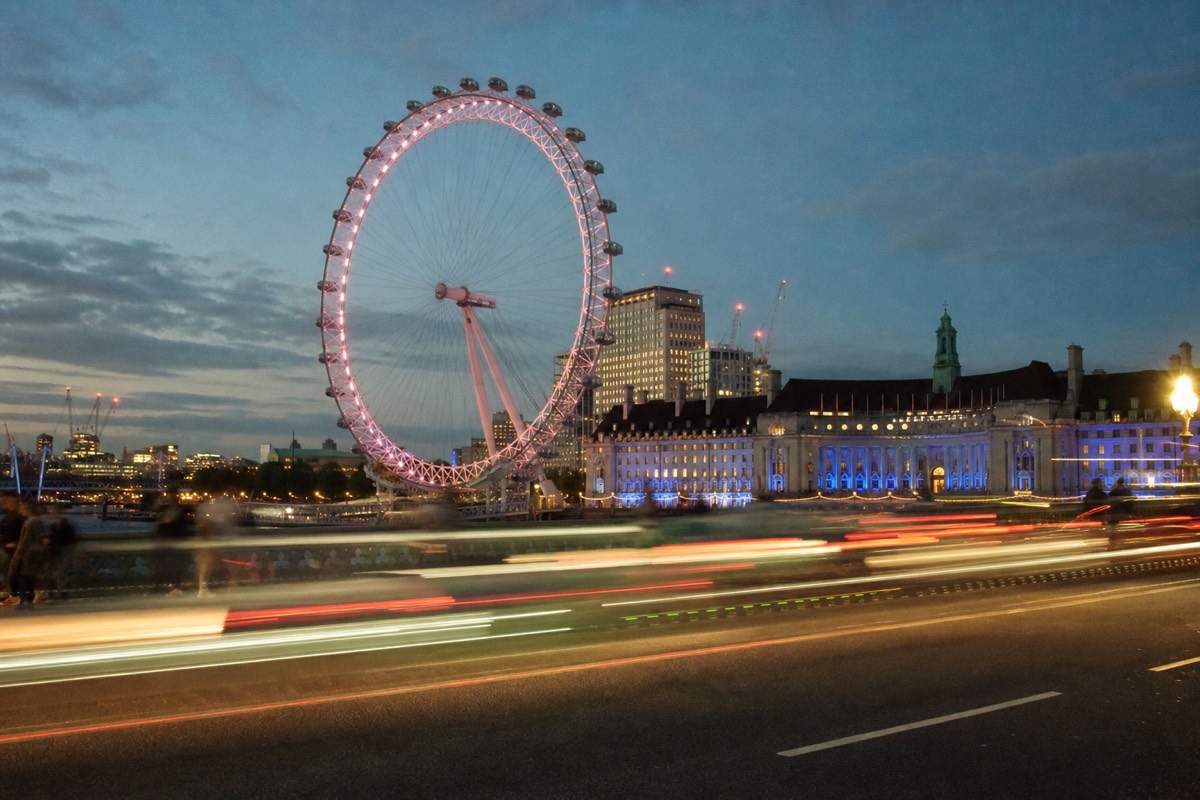
Short answer
London Eye opening and closing times vary by date; 10am is not a universal opening time. Your ticket time marks queue entry and the rotation takes about 30 minutes. The Eye closes on Christmas Day and for a scheduled January maintenance period. Check the calendar for your date.
Opening time is not fixed across the year. The official opening hours page gives a day-by-day calendar: on 24 September 2026 it showed 11am–6pm for the Eye, followed by 10am–8.30pm the next day. Those examples explain why a generic seasonal timetable cannot replace the date you plan to visit.
That gap between "what time is it open" and "what time should I actually turn up" is where most visits go slightly wrong. People book an afternoon slot without comparing it with that day’s sunset, then find the light differs from what they pictured. People book 10am in July because it sounds quiet, and get the full first-wave crowd that queued before the doors opened. The hours are simple. The timing is not.
What time does the London Eye open and close?
Opening and closing times vary by date. Some days start at 10am and others at 11am; later closing is more common on peak dates. The operator advises that entry typically stops 30–45 minutes before closing, and your ticket time marks when you join the queue.
The single most useful habit before booking is to read the closing time for your exact date rather than a generic "summer" or "winter" figure. The London Eye publishes a day-by-day calendar, and the spread between a quiet January Tuesday and a Saturday in the middle of August is wide enough to change which slot is even available to you.
| Planning question | What to check |
|---|---|
| Eye opening and closing | The calendar for your exact visit date |
| Evening ride | Closing time compared with local sunset |
| Cruise departure | The cruise schedule, which differs from the wheel |
| Christmas Day | The Eye is closed |
| January maintenance | Published closure dates for the year of your visit |
The cruise has its own schedule. On 24 September 2026 the official calendar showed sailings from 10.45am to 4.45pm. Check your chosen departure rather than assuming the last boat runs until the wheel closes.
Slot times themselves are released in half-hour bands. You book a band, not a precise minute, and the ticket admits you to the queue for that band rather than to a capsule at that exact time. That distinction is the root of nearly every complaint about waiting, and it is worth understanding before you pick a time.
How long does the Millennium Wheel take to go round?
One full rotation takes about 30 minutes. The wheel turns continuously at roughly 26 centimetres per second, slow enough that passengers step on and off at ground level without it stopping. Staff can assist boarding and may slow or stop the wheel when needed.
Thirty minutes is the figure the operator publishes, the figure Wikipedia's London Eye entry records, and the figure that shows on the standard admission listing tracked on this site. It is one of the most reliably consistent numbers attached to the attraction, and it has not changed since the wheel opened.
What surprises people is that the ride never stops for them. At about 0.6 miles per hour the capsules crawl past the boarding platform, and you walk into a moving pod. Staff supervise boarding and close the capsule doors before departure. The 32 capsules are sealed and air conditioned, they hold a standing crowd rather than seated rows, and a bench runs down the middle for anyone who wants to sit. Capsules are numbered 1 to 33 with 13 skipped, a detail that has outlived nearly every other piece of London Eye trivia.
The published ride duration is approximately 30 minutes, separate from time spent queuing. Operational pauses can affect timing, so leave a buffer before your next booking and avoid treating a queue-entry slot as an exact sunset appointment.
How long are the wait times for the London Eye?
Peak waits can run up to 45 minutes beyond your booked slot time, which the operator itself flags on its opening hours page. Standard admission puts you in the general queue for your half-hour band. Fast Track admission moves you into a separate, shorter line, which can reduce the boarding wait without removing security checks.
The number to hold onto is 45. Not because every visit involves a 45-minute wait, but because that is a planning example the operator publishes for peak conditions, not a guaranteed maximum, and it is the figure you should plan a day around rather than the optimistic version.
Waits cluster around predictable pressure points. The first hour after opening absorbs everyone who arrived early on principle. Late afternoon on a clear day fills with people chasing the light. School holidays, half terms and the run-up to New Year push the whole day upward. A wet Wednesday in February is a different attraction entirely.
Fast Track is the lever that actually moves this. It is not a separate wheel or a private capsule, it is a separate queue, and on a busy day that is the difference between a shorter boarding wait and a longer standard queue, with neither timing guaranteed. The standard admission listing tracked on this site carries both options on one product, with the choice made at checkout rather than on two separate pages, so you are not committing to the upgrade at the moment you decide which day to visit. Our breakdown of how fast track compares with the standard queue goes through when the premium earns itself and when it does not.
One more thing about waits: the queue is outdoors and largely unsheltered. London weather is the reason a lot of visitors who could have waited 40 minutes decide after 12 that they wish they had upgraded. Factor the forecast, not just the crowd.
What is the best time of day to book your slot?
Early or later slots can reduce queue pressure, while a rotation near sunset may offer changing light. No slot guarantees a short queue or clear weather. Pick the view you want and leave enough time around the booked queue-entry time.
Every slot is a trade between three things: how long you queue, how clear the air is, and what the light is doing. They do not peak together, which is why there is no single correct answer.
| Slot | Queue pressure | What you see | Best for |
|---|---|---|---|
| First hour after opening | Can be quieter, but varies | Daylight detail if the weather is clear | Photographers, families with small children, anyone on a tight schedule |
| 11am to 2pm | Building steadily | Flat overhead light, good detail on the city grid | First-time visitors with a full day planned around it |
| 2pm to 4pm | Heaviest on weekends and holidays | Harsh or grey depending on cloud, least flattering | Nobody, if you have a choice |
| The hour before sunset | Variable; check your date | Warm low light, the whole skyline lit from the side | The one slot worth planning a whole day around |
| After dark, until closing | Falls away steadily toward closing | The city as a light map, reflections on the Thames | Couples, second visits, anyone who has already seen it in daylight |
Two practical notes on that table. First, the sunset slot is a moving target: in late June sunset falls after 9pm and may be later than closing, while in December it can fall barely past 3:30pm and collides with the busiest part of the afternoon. Check the actual sunset time for your date before assuming the golden slot exists. Second, the operator suggests later visits can be quieter, but the final band is not guaranteed to have the shortest queue.
Is it better to do the London Eye at day or night?
Neither wins outright. Daylight gives you distance and detail, including Windsor on a genuinely clear day. Darkness gives you the skyline as a light display and the best photographs of the Thames. The strongest single answer is the slot that straddles both: board in the last of the light and step off after dark.
This question recurs so persistently in search that it has its own page on this site, so the short version belongs here and the long version belongs there. What matters for scheduling is the overlap. Because the rotation runs a full 30 minutes and sunset light changes fast, a well-chosen slot delivers two different views on one ticket: the city in colour on the way up, the city in lights on the way down.
The catch is that sunset moves substantially between midsummer and midwinter, independently of the offered entry times. In December it is a comfortable mid-afternoon booking. In June it barely exists inside operating hours. If the dual view is your priority, our full comparison of how the day and night rides actually differ works through what each one gives you and what the photographs really look like.
Evening slots also change the character of the queue. Later in the day the crowd skews away from families and toward couples and groups, and the upgrade options start to make more sense. The champagne experience tracked on this site is built around exactly that audience: fast-track boarding, a separate pre-boarding lounge, a personal host, and a glass of Moët & Chandon Impérial Brut on the standard 30-minute rotation. The capsule remains shared, and alcohol is served only to guests aged 18 or over.
When is the London Eye closed?
The Eye closes on Christmas Day and during a scheduled January maintenance period. The dates change by year: the published 2026 maintenance period was 5–18 January inclusive. Severe weather or operational issues can also interrupt boarding.
Do not treat the whole of January as closed or carry the 2026 dates into another year. Check the published maintenance window for the year of your visit before arranging travel around a ride.
The operator monitors weather and wind conditions and may temporarily close the wheel in severe conditions. Follow the day’s operating updates and the instructions for your booking if service is interrupted.
Cancellation and rescheduling depend on the selected ticket’s terms and deadline. Check those conditions when booking rather than assuming that a weather change permits a last-minute refund.
How much time should you allow for the whole visit?
Allow around 90 minutes as a planning estimate for the Eye, with extra flexibility on busy dates. The ride takes about 30 minutes; queuing, security and boarding add time. Fast track can shorten the boarding queue, but neither ticket guarantees a total visit length. Adding SEA LIFE next door needs a separate visit window.
The mistake is budgeting only 30 minutes because that is the ride length. Queues can take longer than the rotation on a busy day.
| What you are doing | Standard admission | Fast Track | Combo with a second attraction |
|---|---|---|---|
| Arrival, security and bag check | 10 to 15 min | 10 to 15 min | 10 to 15 min |
| Queue for your slot | Variable; operator cites 45 min at peak | Shorter queue; no fixed duration | Same as your chosen tier |
| The rotation | 30 min | 30 min | 30 min |
| Second attraction | n/a | n/a | Allow 90 min or more |
| Planning allowance | Around 90 min, with flexibility | Can be shorter; retain a buffer | Allow a separate window for both visits |
If you are pairing the wheel with a boat, the timings tighten again. The official river cruise is a 40-minute round trip from the London Eye Pier, and departure times vary by date. The wider combo tracked on this site takes a different shape: a one-way Thames cruise stacked onto a 24 or 48-hour hop-on hop-off bus pass across three routes, with live tracking on the bus app, audio commentary and free onboard Wi-Fi. That one is built to spread across a day or two rather than to slot neatly into a single afternoon, and our full breakdown of the river cruise and bus combo explains how the validity windows work.
Getting there is the other timing variable people forget. Waterloo is the closest mainline and Underground station, and the walk from the concourse to the boarding queue is short but not instant, especially through a Saturday crowd on the South Bank. Allow ten minutes more than the map suggests on a weekend, and more again with a group that stops to photograph things on the way. Our guide to the fastest routes to the South Bank entrance covers the station and river-pier options.
Is it cheaper to book online than at the ticket desk?
Advance booking can cost less than buying on the day, but the difference depends on your date and option. Compare the current total for the same party, currency and queue tier; there is no fixed saving that applies to every booking.
The gap is deliberate. Timed slots let the operator smooth demand across the day, so the pricing pushes you into booking one. Walking up also means taking whatever slot is left, which on a busy afternoon may be several hours away or nothing at all.
| Comparison | Use the same basis |
|---|---|
| Standard versus fast track | Same visit date and party |
| Advance versus on-the-day | Actual quoted totals, not an assumed fixed gap |
| Child admission | Age band in the selected listing |
| Infants | Reserve the required free infant ticket |
Prices and promotions vary. Check the official site's current prices here, or use the full price breakdown across every ticket tier to understand what each option includes.
GetYourGuide can display different currencies. Compare the selected-date total in the same currency as any other quote, including all members of your party.
Which upgrade actually saves you time?
Fast Track is the only upgrade that buys back queue time directly. Combo tickets add attractions; any saving depends on the selected-date totals, and they do not themselves shorten the boarding queue. The champagne experience includes fast-track boarding, so it saves time as a side effect of what you are really paying for.
Sorting the five tickets by what they do to your clock is a useful exercise, because they are usually sorted by price instead.
| Ticket | Effect on queue time | What you are really buying |
|---|---|---|
| Standard admission | None, you join the general queue | The ride without a queue upgrade |
| Fast Track admission | Direct, a separate shorter line | Time back on a busy day |
| Champagne experience | Direct, fast-track boarding included | The Eye Lounge, a host, and a glass of Moët & Chandon |
| SEA LIFE combo | None on the wheel itself | Two South Bank attractions on one ticket |
| Three-attraction combo | None on the wheel itself | Tussauds, the Eye and SEA LIFE; reserve each visit within the voucher’s stated window |
Read that table alongside your schedule. Fast track may be less valuable when the standard queue is short, and more useful when your day has less flexibility. Weather and the calendar cannot guarantee a particular wait.
The three-attraction combo deserves a note here even though it does nothing for your queue: it books Madame Tussauds as a timed entry for a specific day and leaves the London Eye and SEA LIFE portions to be redeemed by voucher within the booking window stated on the voucher. That structure is a scheduling tool, not a queue tool. It lets you put the wheel on the clear morning and the aquarium on the wet afternoon rather than forcing all three into one day.
Do I need to book a time slot for the London Eye?
You do not strictly have to, but the pricing and the availability both push hard toward booking. Walk-up prices depend on the date and ticket tier, and on busy dates the remaining same-day slots can be hours out or sold through entirely. A booked slot admits you to the queue for a half-hour band rather than guaranteeing a capsule at an exact minute.
Can you just turn up to the London Eye without booking?
Yes, tickets are sold on the day at the ticket office. The on-the-day price and available slots depend on your date and chosen option. On a quiet winter weekday that is a workable plan. During school holidays, a summer weekend or the run-up to New Year it frequently is not.
How much time should you spend at the London Eye?
Allow around 90 minutes as a planning estimate, with extra flexibility on busy dates. The rotation takes about 30 minutes; fast track can shorten the boarding queue without guaranteeing a total duration. Plan a separate visit window if adding SEA LIFE.
Is it cheaper to book online for the London Eye?
It can be. Compare current totals for your visit date and party in the same currency; the advance saving varies and expired promotions should not be used as today’s price.
What time does the London Eye close in winter?
Closing varies by date, with shorter hours on many winter dates. Read the calendar for your chosen day rather than relying on a seasonal closing time. Entry stops 30 to 45 minutes before closing either way. The wheel is closed on Christmas Day and closes for a scheduled maintenance period in January, so check the operator's day-by-day calendar for any winter date before booking travel around it.
Choose Your London Eye Experience
Choose your visit date before fixing the rest of your London plans, then check the ticket option and queue-entry time.
London Eye Standard or Fast Track Ticket. A 30-minute rotation. Choose standard or fast-track boarding; security and some waiting remain. Reserve the dated option that suits your party.
Tailor Your Ticket Choice And Compare Costs
- London Eye Champagne Experience: A shared-capsule 30-minute ride with fast-track entrance, an English host, Eye Lounge access and a glass of champagne for adults aged 18+. Security screening still applies.
- London Eye River Cruise, with Optional London Eye Ticket: An approximately 40-minute circular cruise from London Eye Pier, with English commentary and covered or open seating. Eye admission is included only if you select the combined option.
- SEA LIFE London + London Eye Combo: SEA LIFE and standard London Eye entry. The initial slot is for SEA LIFE; reserve the Eye separately with your voucher. Transport and food are extra.
Choose dates directly on GetYourGuide
Confirm your visit date on the booking page before payment.